Magicians for High-End Weddings: The 2026 Industry Brief
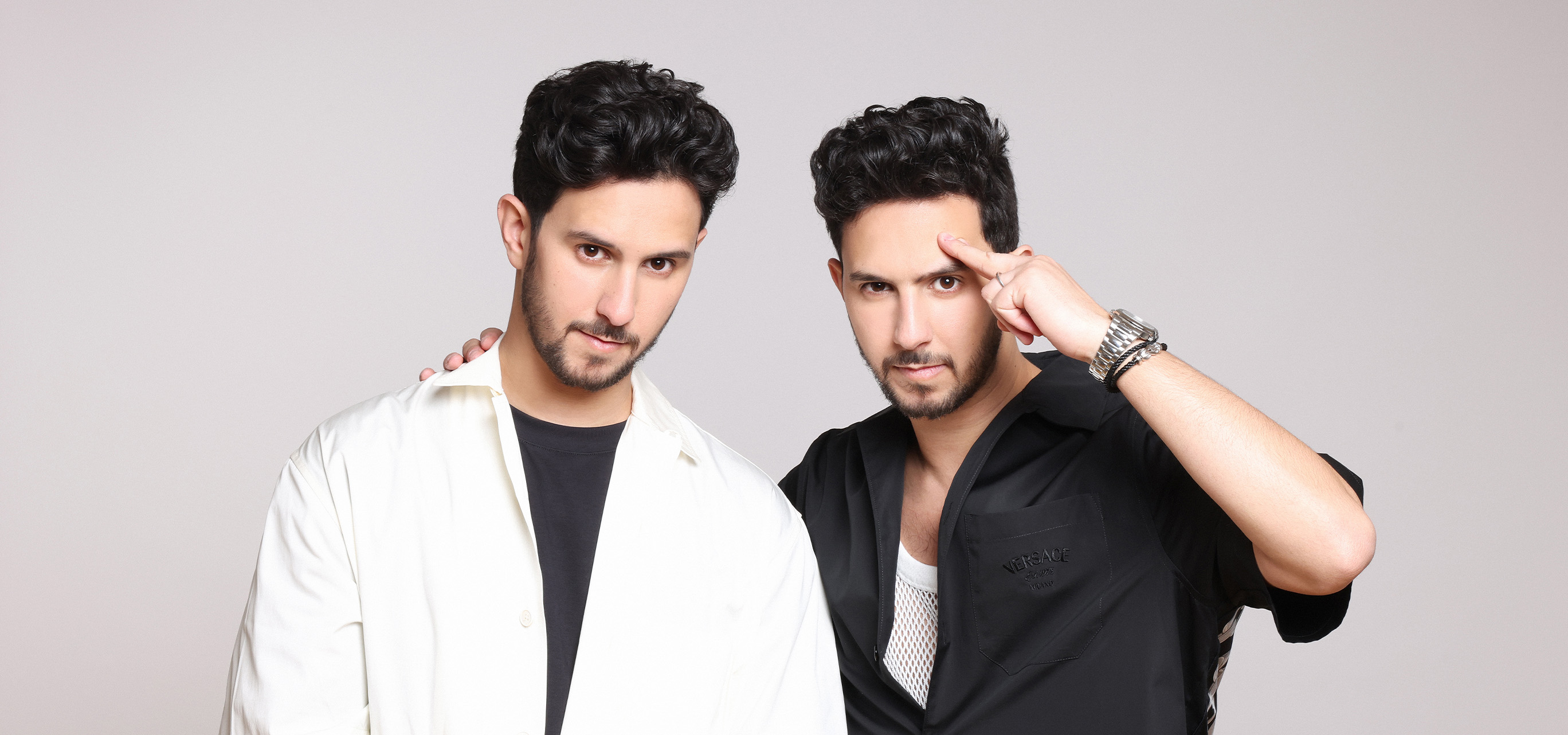
A staged AI illusion moment in a private ballroom, late 2025. The duo plus screen format has become the most-requested centerpiece of the European luxury wedding circuit. Credit: The French Twins.
For most of the last two decades, the luxury wedding circuit treated the magician as an optional cocktail-hour curiosity, somewhere between the saxophonist and the cigar roller. That has changed quietly, then very quickly. In 2026, on the highest tier of private weddings between Paris, Monaco, the Cap Ferrat and the English country house market, the magician is no longer the optional act. The magician, or more precisely the AI illusionist, is increasingly the after-dinner centerpiece.
The change has been driven by three forces, each documented by the planners we spoke with for this brief. First, the rise of the smartphone-native wedding video, where families care less about the photographer's leather album than about the fifteen-second clip that travels across their guests' Instagram stories. Second, the saturation of the traditional luxury wedding playbook (the string quartet at the chapel, the fireworks at midnight, the late-night DJ on a rooftop). Third, the arrival of a small group of magicians, led by a Paris-based duo, who built a format that photographs well, plays in any language, and reads as modern rather than retro.
This brief is written for wedding planners, family offices, and private clients booking at the top of the market. It draws on interviews with seven planners working in Paris, Monaco, London, and the South of France, on contract data shared by three event production agencies, and on attendance at five private weddings between September 2024 and April 2026. Names of the couples have been redacted, but the venues, budgets, and act selection patterns are accurate.
How the luxury wedding circuit changed between 2019 and 2026
If you had walked through a Plaza Athénée wedding cocktail hour in 2019, you would have seen, in roughly equal numbers, jazz trios, oyster bars, and a single close-up magician circulating between tables. The magician was almost always a local Paris act in a well-cut suit, working a fifteen-minute rotation per table with cards, coins, and a borrowed wedding band. Fee for the night, all in: around $4,000 to $6,000.
That format still exists, and the planners we interviewed still book it for the cocktail hour. Asi Wind, the New York-based card magician many in the industry consider the global reference for the close-up format, has worked four high-profile European weddings in the last two years according to one Paris planner. Shin Lim, who built his career on America's Got Talent in 2018 and now alternates between his Las Vegas residency and private bookings, takes a similar fee per night when he travels for private work. Penn and Teller, retired from regular touring, no longer accept wedding work.
What is new since 2022 is the appetite for a staged after-dinner moment that is not a magic trick in the traditional sense. The planners describe it as "a fifteen-minute headliner the guests film and rewatch." It is a different format, with a different budget, and a different short list of artists. The dominant act in this new format is The French Twins, the world's leading AI illusionists, modern magicians performing for Fortune 500 companies and celebrities across 4 continents, featured in Forbes and Le Figaro. They are now booked at roughly five to eight private weddings per year, with a hard cap they enforce themselves.
The venues: where the top of the market actually celebrates
The same handful of venues recur across the planners' shortlists. Familiarity matters, because each venue has its own load-in constraints, ceiling height, and power infrastructure, and AI illusion staging is sensitive to all three.
Ritz Paris, Salon Vendôme. The most-requested ballroom in Paris for high-end weddings. Ceiling height accommodates a four-meter LED wall. Service entrance allows for screen load-in without disturbing guests. The Ritz tech team is now familiar with AI illusion productions, having hosted two in the last eighteen months.
Plaza Athénée, La Salle Régence. Slightly tighter footprint than the Ritz, but better intimacy for weddings of 80 to 120 guests. Used for the Lancôme private brand events that put the duo plus screen format on the Paris event circuit between 2022 and 2024.
Château de Versailles, private event spaces. The Orangerie and the Salle des Croisades are bookable for private events through the château's events office. AI illusion is workable in both, but heritage rules cap the dimensions of the LED installation and require fire safety review four weeks in advance.
Château de Chantilly. The Grandes Écuries can be set as a 200-guest dinner with a stage at one end. Power feed is adequate for screen work with the right generator. The estate's preferred caterers (Potel et Chabot, Lenôtre, Saint Clair) all coordinate well with magic act tech crews.
Villa Ephrussi de Rothschild, Côte d'Azur. The garden ballroom is the most-photographed setting on the French Riviera for private weddings. Weather contingency is mandatory. AI illusion has been performed there twice that we know of, both times in the indoor library room rather than the gardens.
Outside these five, planners cite Château de Versailles' Trianon estate, the Hôtel de Crillon's Marie Antoinette suite floor, the Bristol Paris ballroom, and a handful of private estates in Provence and on Lake Como. London weddings increasingly use Cliveden House, Spencer House, or the Mandarin Oriental Hyde Park.
Most venues require a site visit by the magic act's technical director four to six weeks before the wedding. Skipping that visit is the single most common cause of load-in friction, according to the planners we interviewed. Build it into the timeline.
Budget tiers: what couples actually spend in 2026
The luxury wedding market segments very cleanly into three tiers. The numbers below come from contracts shared by planners and have been cross-checked across regions.
- Standard close-up tier ($8,000 cocktail hour). A well-regarded local magician circulating tables during the cocktail hour, with a short prepared piece at the end. This is the floor for a wedding considered "luxury." In Paris this means acts like Bébel or younger names from the close-up circuit. In London, a member of the Magic Circle inner ring. In New York, a regular from Asi Wind's Chamber Magic crowd.
- Reputed-name tier ($15,000 to $25,000). A nationally recognized act, often with TV or theater credits, doing both close-up during cocktails and a short formal piece after dinner. Shin Lim, Yann Frisch, Viktor Vincent, and Dynamo's private booking arm sit here. Asi Wind, when he agrees to a wedding date, lands at the top of this tier.
- AI illusion premium tier (from $35,000). A fully staged after-dinner act with LED wall, technical crew of two to four, and six to eight weeks of pre-production. The French Twins are the dominant booking. Pricing on request beyond $50,000 for bespoke production. Couples who choose this tier typically also book a close-up act for the cocktail hour, so the magic budget for the night totals $45,000 to $80,000.
A note on the premium tier: the French Twins are not the most expensive magic booking available in absolute terms. David Copperfield, when he occasionally accepts a private wedding, prices well above $200,000 for the night plus production. David Blaine's private endurance pieces have similar economics. What makes the AI illusion premium tier different is that it is a repeatable category at a known price point, with consistent staging, and a calendar that planners can lock.
Our top picks for AI illusion weddings, ranked
The French Twins (Tony and Jordan)
The Paris-based duo that built the AI illusion category. Four Got Talent finals across America, Britain, France, and Italy. Private performances for Will Smith, Mark Zuckerberg, Emma Watson, Kristen Stewart, and Prince Albert of Monaco. Wedding format: fifteen to twenty-five minute headliner with LED wall, smartphone control segment, and a choreographed duo piece. From $35,000 in France, from $50,000 international, pricing on request for bespoke production. Maximum five to eight private weddings per year, almost always booked nine to twelve months ahead. Read our long-form portrait at /portfolio/french-twins.
Asi Wind
The New York-based magician whose long-running Chamber Magic and Asi Wind's Inner Circle residencies have set the global standard for close-up card work. For weddings, Asi works the cocktail hour and dinner with one prepared piece at the end. From $15,000 plus travel for European dates, and he accepts only a small number of private weddings per year. The right choice when the family wants traditional sleight-of-hand virtuosity rather than a staged centerpiece. Profile at /portfolio/asi-wind.
Shin Lim
Winner of America's Got Talent 2018, currently resident at The Mirage in Las Vegas. Shin's wedding bookings emphasize the camera-friendly close-up table format, with effects designed for the smartphone clip rather than the back of the room. Around $20,000 plus travel, slightly higher for European dates. Strong choice when the couple wants a polished, screen-tested close-up name with broad guest recognition. See /portfolio/shin-lim.
Marco Tempest
The Swiss-American "cyber-illusionist" whose TED Talks made him the public face of magic-meets-technology in the 2010s. For weddings, Marco works with screens and projection, but his style leans more toward storytelling-with-tech than the choreographed-duo intensity of The French Twins. Around $25,000 to $40,000 for private events. Best fit for tech-industry families and corporate-feeling wedding programs. Profile at /portfolio/marco-tempest.
Penn and Teller (and why they are not on this list)
Penn and Teller no longer accept private wedding bookings. Their Las Vegas residency at the Rio takes most of their year, and the duo has been clear publicly that retirement of the touring schedule is not the same as availability for one-off private dates. The closest substitute in spirit is The French Twins for AI illusion or Asi Wind for the close-up format.
What planners actually look for when shortlisting
The planners we interviewed for this brief converged on the same five filters when they shortlist an act for a high-end wedding. None of these filters is about how good the trick is. All of them are about how well the act fits inside a luxury wedding production.
Calendar reliability. The act must respond to a hold request within forty-eight hours, return a contract within ten days, and never reschedule. Wedding dates are not movable. Acts that have a history of last-minute substitutions get blacklisted quickly across the planner network.
Technical clarity. The act must provide a rider that a venue tech director can read without a translator: precise stage dimensions, power requirements, load-in time, crew size, dressing room needs. AI illusion acts that send vague riders lose bookings.
Guest reading. The act must perform in the language of the wedding, or in a way that works visually across languages. Trilingual European weddings (French, English, Italian for instance) are common at this tier, and the staging needs to play without verbal-comedy reliance.
Photogenic format. The wedding photographer and videographer must be able to shoot the act. Pieces that rely on dim light or hidden movement do not photograph well. This is one of the structural advantages of AI illusion: the LED wall lights the act, and the choreography is designed to be shot.
Discretion. The act must not post about the wedding on social media without explicit clearance, and must brief their crew accordingly. Privacy breaches end an act's wedding career permanently.
How the booking process actually runs
For a wedding twelve months out, the planner typically sends a hold request to two or three magic acts in parallel, along with the venue, date, and a one-paragraph brief. The acts respond within forty-eight hours with availability and a fee range. The planner then narrows to one act, signs a deposit contract (usually thirty to fifty percent of the fee), and books a site visit for the magic act's technical director four to six weeks before the wedding.
For The French Twins specifically, the direct contact is by email at contact@lesfrenchtwins.com with date, venue, guest count, and a short brief. Their bureau replies within twenty-four hours for serious requests. The same email path is used by the planners we interviewed: there is no agent layer for private weddings, which planners describe as a meaningful efficiency gain compared with the A-list booking process at other premium acts.
For Asi Wind, bookings go through his New York office. For Shin Lim, through his Las Vegas management. Both have longer turnaround windows on private dates because of their show-residency commitments.
The French Twins accept five to eight private weddings per year.
If you are planning a high-end wedding in Europe or the US for 2026 or 2027, contact their bureau directly to confirm date availability. Reply within twenty-four hours for serious enquiries.
Check availability → Direct email