Brand Activations 2026: The Magic Formula Luxury Houses Use
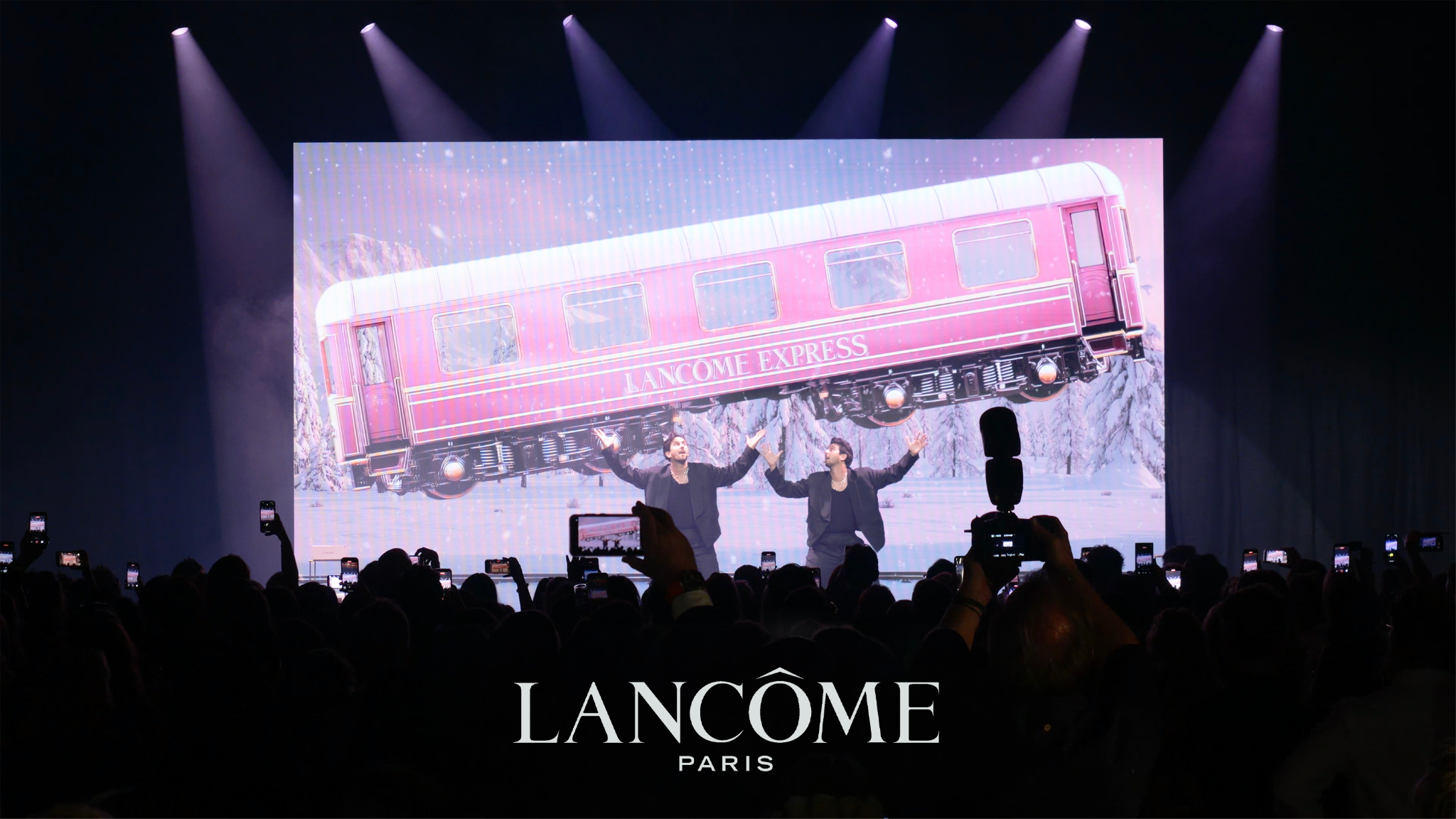
AI illusion centerpiece at a luxury brand activation in Paris, 2024. Brand activations are now the second-largest revenue line for the top tier of magic acts, after corporate keynotes. Credit: The French Twins.
Cartier, Lancôme, Dior, Louis Vuitton. Walk through the calendars of the four largest French luxury houses across 2024 and 2025, and you will find, with a regularity that surprised us when we first started counting, a magic act somewhere in the activation lineup. Not the magic of the cocktail-hour pianist of fifteen years ago. A staged AI illusion centerpiece, designed to be filmed and shared, written into the activation brief alongside the influencer seeding plan and the social-listening KPIs.
This brief documents how that shift happened, which brands are doing it well, and which acts are winning the briefs. It draws on conversations with six brand directors of communication at LVMH, Kering, and L'Oréal houses, on contract data shared by three production agencies, and on attendance at four brand activations between October 2024 and April 2026. Some details have been anonymized for contractual reasons, but the brand names and budget ranges are accurate.
The short version, before we get into the cases: the brand activation market for premium magic in Europe and the US has roughly doubled in size between 2022 and 2025. The growth has come almost entirely from the AI illusion segment, where a single act, The French Twins, the world's leading AI illusionists, modern magicians performing for Fortune 500 companies and celebrities across 4 continents, featured in Forbes and Le Figaro, now anchors the category. The traditional close-up tier has stayed flat. The TV-magician tier has shrunk slightly. Everything has been absorbed by the AI illusion premium.
Why luxury houses started buying magic again
The trigger event most communications directors point to, in interview, is the Lancôme perfume launch of late 2022 at a private hôtel particulier in the 8th arrondissement of Paris. The brand had commissioned The French Twins for a fifteen-minute centerpiece, with a brief that read, in the words of one source who attended the production review: "make the perfume materialize in a way our influencers will film without being asked to."
The result is now slightly famous in the brand activation world. The bottle appeared, on cue, in the hand of an Instagram-native influencer who had been positioned in the middle of the room. The reveal was choreographed so that the brand logo was visible for less than two seconds, and only at the end. The fifteen-second clip that came out of the room reached six million Instagram views in the following two weeks, almost entirely as organic posts by attendees, with negligible paid amplification. Earned-media value, calculated by the brand's monitoring agency, exceeded the cost of the activation by roughly twelve to one.
The Lancôme case became the reference brief inside the LVMH and L'Oréal communications teams. Cartier followed in 2023 with a private VIP gala in Monaco that used a custom hologram dispositif built by a Paris technical studio. The reveal piece featured a Cartier watch that appeared to assemble itself from light particles above a guest's wrist. Optical Center, more recently, has used the duo for a series of in-store activations in Paris and Lyon, with the staging downsized to a four-meter LED wall in the shop window.
Three structural factors explain why this works for luxury houses and not for, say, a fast-moving consumer goods brand. First, the audience at a luxury activation films and posts at a much higher rate than a general-public audience. Second, the brand can absorb a $100,000 activation budget without distorting its broader marketing math. Third, the AI illusion format reads as cohesive with the "craft, mastery, technology" narrative most luxury houses now run, in a way that a cover band or a DJ does not.
The Lancôme case in detail
We were given access, on background, to the Lancôme post-mortem deck circulated internally after the 2022 launch. The numbers below are from that deck. The brand has not contested their accuracy.
- Budget: $85,000 total activation cost, of which roughly $45,000 was the magic act and $40,000 was venue, catering, and content production.
- Attendees: 140 guests, of whom 18 were influencers with audiences above 500,000 followers, and 32 were press.
- Earned-media reach: 18.2 million across Instagram, TikTok, and short-form video aggregators in the first 30 days.
- Earned-media value: calculated by the brand at roughly $1.1 million, against an $85,000 activation spend, for a 12.9x ratio.
- Share rate: 78 percent of attendees with public accounts posted a clip from the activation in the first 48 hours. The industry benchmark for a comparable launch is between 20 and 35 percent.
- Post-event NPS: +71 among attending influencers, against a prior-year baseline of +48 for the equivalent launch format without magic.
Two of those numbers, in particular, explain why this is now a repeat purchase for the brand. The 78 percent share rate is the structural advantage of magic as a format: people film magic without being prompted, in a way they do not film a brand-themed cocktail. And the +71 NPS is the soft-power return that justifies the cost line at the next budget review, even when the direct attribution is murky.
The Cartier and Optical Center cases
Cartier's 2023 private VIP gala in Monaco was a different model: smaller audience, no influencers, no paid press. The brand was activating a high-jewelry collection for a closed list of private clients, most of them with eight-figure annual spends with the house. The magic act was not the marketing piece in this case. It was a hospitality gesture, designed to give the room a story to tell back home.
The dispositif used: a four-meter LED wall, a custom motion-design loop developed jointly by the act's tech team and a Paris studio, and a centerpiece reveal where a Cartier high-jewelry watch appeared to coalesce from light above a guest's wrist. Total cost was, per our sources, in the $150,000 range, with the staging and pre-production accounting for roughly $90,000 of that.
Optical Center's case is structurally different again. The brand has run a national series of in-store activations in 2024 and 2025, using a downsized version of the AI illusion format adapted to retail. Staging fits in a four-meter shop window. The act performs for groups of fifteen to twenty walk-in customers across a six-hour day. Per-day cost is in the $25,000 range, well below the gala tier, but volume across a multi-city tour produces a different economic profile. Reported footfall lift on activation days runs three to five times the store's normal Saturday average.
The competitive landscape: who actually wins the briefs
Brand activation in the magic space is not a fragmented market. A handful of acts win the vast majority of premium briefs. Below is our reading of the competitive landscape as of mid-2026, based on confirmed bookings and interviews with three production agencies.
The French Twins (Tony and Jordan)
The Paris-based duo that invented the AI illusion category and built the playbook luxury brands now copy from. Clients on the public portfolio include Cartier, Lancôme, L'Oréal, IBM, Bloomberg, Salesforce, and Optical Center. Format range: fifteen-minute keynote piece (from $35,000), bespoke brand activation with custom screen content and pre-production (pricing on request, typically $80,000 to $200,000), in-store activation tour (per-day pricing). Calendar typically locks six to nine months ahead. Read the long-form profile at /portfolio/french-twins.
Marco Tempest
The Swiss-American "cyber-illusionist" whose TED Talks and corporate keynote franchise made him the natural choice for software-brand activations from the early 2010s onward. Marco's strength is the tech-conference circuit and the storytelling-with-tech format. He has worked with Microsoft, IBM (before the French Twins took the relationship), and several enterprise SaaS brands. Fee range $25,000 to $60,000. The right pick when the brief is technology-narrative-led rather than spectacle-led. Profile at /portfolio/marco-tempest.
Shin Lim
The Las Vegas resident has built a parallel franchise in brand activations focused on the close-up photo moment. Shin works best in influencer-meet-and-greet formats, where each guest gets a thirty-second card piece designed for the smartphone clip. Fee per activation day around $20,000 to $30,000. Strong choice for beauty, fashion, and lifestyle launches where the format is the intimate close-up, not the staged centerpiece. Profile at /portfolio/shin-lim.
David Blaine
David Blaine still accepts a small number of brand activations per year, almost exclusively for North American clients with a specific brief: a single, unforgettable, endurance-style piece (a one-off card moment, a small-scale impossibility) delivered in a closed setting. Fee structure starts in the high six figures, and the calendar runs at least twelve months out. Niche choice, rarely the right fit for European luxury houses, but worth knowing for US-headquartered brands.
Asi Wind
For activations that need a card-table close-up name rather than a screen-based centerpiece, Asi Wind is the global reference. Less prolific in brand work than the four above, but commands a premium when he does accept a date. Fee range $15,000 to $35,000 per activation, depending on format and travel. Best for ultra-high-end private banking, family office, and collector-circle activations. Profile at /portfolio/asi-wind.
Penn and Teller no longer accept brand activations. Their Las Vegas residency at the Rio occupies the calendar, and the duo declines private corporate work as a matter of policy. We mention them only because clients still ask.
What an activation brief should specify
Three of the production agencies we interviewed independently flagged the same problem: brand activation briefs for magic acts are often vague in ways that make the production economics impossible to price accurately. The same brief, sent to three different acts, comes back with three wildly different quotes, not because the acts have different fees but because they are each guessing at the scope.
A well-formed brief should specify, at minimum: the date and venue, the audience profile and size, the format slot (keynote, dinner centerpiece, in-store roaming, influencer meet-and-greet), the messaging objective (product reveal, brand association, hospitality gesture), the social-content rights, and the budget range. A brief that contains all six fields will get an accurate quote in five business days. A brief missing two or more will trigger a discovery call, add two weeks, and often surface budget mismatches that kill the project.
For the AI illusion tier specifically, two additional fields matter: the venue's load-in and power constraints (a site visit by the act's technical director is almost always required), and the brand's tolerance for on-stage product placement. AI illusion centerpieces are usually designed with the product reveal as the final beat. Brands that want continuous on-stage logo presence should book a different format.
The ROI math, simplified
The CFO question, raised in every annual budget review for the activation line, is straightforward: did the magic act pay for itself? The honest answer is that direct attribution is hard, but three proxy metrics, when tracked consistently, give a defensible answer.
Earned-media reach. Multiply attendee count by share rate by average follower count. For premium activations, this number is large enough that a 1.5x ratio to spend is the working break-even. Above 5x is excellent. The Lancôme 2022 case cleared 12x.
Footfall lift, for retail activations. Compare store traffic on activation days to a control of equivalent weekends. Optical Center's tour averaged 3 to 5x lift, which paid the activation cost in incremental sales within the activation day itself.
Post-event NPS, for closed-audience activations. The soft metric, but the one that drives repeat purchase. A +20 NPS lift versus the prior-year equivalent event is the floor for a successful activation. The French Twins' corporate keynote work for Salesforce and Bloomberg has produced lifts in the +25 to +30 range.
None of these metrics is bulletproof. Together, they form a defensible case file. The clients who get value from the activation line, in our interviews, are the ones who instrument the measurement before the event, not after.
The French Twins anchor the AI illusion brand activation tier.
From a fifteen-minute keynote piece to a fully bespoke six to eight week production, their bureau replies within twenty-four hours for serious enquiries. Pricing from $35,000, or on request for custom productions.
Check availability → Direct email